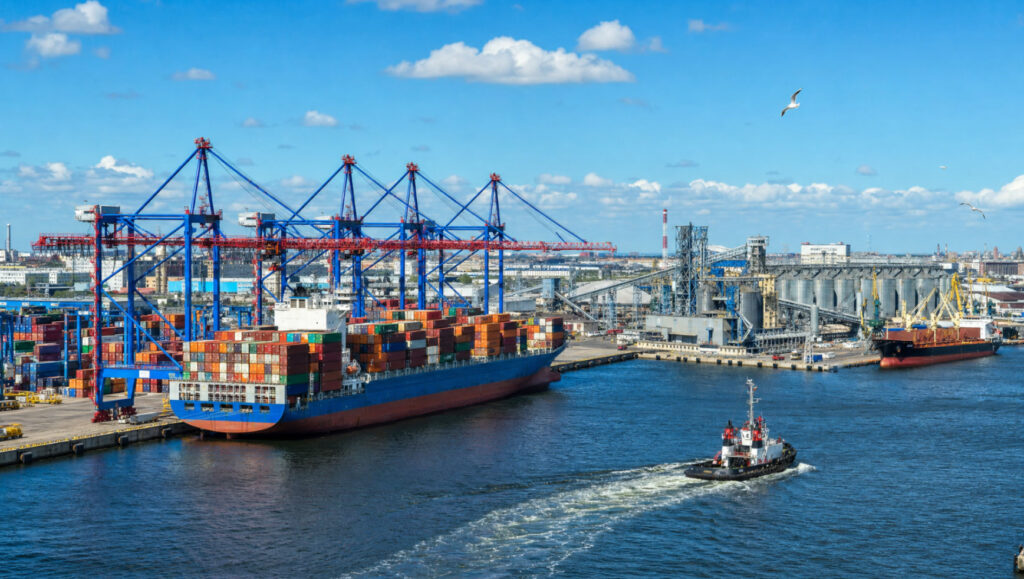
The seaport cluster of Saint Petersburg and the Leningrad Region represents the primary maritime gateway of Northwestern Russia, connecting domestic industrial corridors to international ocean freight routes across the Baltic Sea basin. Following a structural recalibration of global supply chains and trade flows, regional ports have adapted dynamically: direct ocean services operate to and from Asia, Latin America, the Middle East, and India, while digitalized port documentation has substantially expedited container dispatch via rail and road networks.
For foreign trade operators and cargo owners, selecting the optimal stevedoring terminal in the Saint Petersburg basin directly impacts wharfage fees, customs inspection turnaround at Baltic Customs, and total landed logistics costs. In this comprehensive briefing, the maritime logistics specialists at Aurus Logistic evaluate regional terminal capabilities, cargo specialization, operational bottlenecks, and digital customs workflows.
Port Cluster Infrastructure: The Big Port Complex and Bronka Outport
Maritime terminal operations across the Saint Petersburg maritime hub are bifurcated between the historic inner-harbor basin and the deep-water outer port:
- Big Port Saint Petersburg (BPSP): Situated in the delta of the Neva River and Neva Bay. It encompasses dozens of specialized berths interconnected by the dredged Saint Petersburg Sea Channel (SPbMK) and extensive rail yards. The district accommodates the region’s core container, refrigerated, bulk, and breakbulk handling facilities.
- CTSP (Container Terminal Saint Petersburg): A regional market leader in containerized freight throughput located in Cargo District 4. It features high-performance Ship-to-Shore (STS) gantry cranes, extensive multi-track intermodal rail connections, and dedicated covered customs examination zones.
- FCT (First Container Terminal): The oldest and most technologically integrated container facility in the inner harbor (Gutuevsky Island). Specializing in scheduled liner shipping, FCT features an extensive refrigerated container yard (over 2,500 electrical plug points) and direct overhead flyover access to the Western High-Speed Diameter (WHSD / ZSD) tollway.
- PLP (Petrolesport): A versatile, multifunctional terminal complex handling containerized freight, ferrous/non-ferrous metals, breakbulk cargo, and Roll-on/Roll-off (Ro-Ro) rolling stock. PLP features extensive sheltered customs bonded warehouses (SVH).
- MMPK Bronka (Multipurpose Sea Cargo Complex): A modern deep-water outport situated outside the municipal urban core near Lomonosov. Strategic advantages: a 14.4-meter operational draft allowing direct ocean-going container vessels to berth without navigating the shallow inner Sea Channel, direct highway access to the Saint Petersburg Ring Road (KAD), and unrestricted heavy vehicle transit free of urban traffic bans.
Comparative Matrix: Key Maritime Terminals of Saint Petersburg
| Terminal Facility | Cargo Specialization | Navigational Draft / Vessels | Intermodal Evacuation Corridor |
| CTSP | ISO containers, project & heavy-lift cargo | Draft up to 11.0 m; feeder & intermediate ocean vessels | Direct link to WHSD tollway; high-volume container rail yard |
| FCT (PKT) | Containers, reefer blocks, chemical cargo | Draft up to 11.5 m; large reefer block (>2,500 plug sockets) | Rapid gate-out dispatch via dedicated WHSD highway connector |
| Petrolesport (PLP) | Containers, breakbulk, steel products, Ro-Ro | Draft up to 11.0 m; multi-berth handling & covered warehouses | Dual access to ‘Novy Port’ rail siding and municipal highway arterials |
| MMPK Bronka | Containers, oversized cargo, wheeled vehicles | Deep-water (draft up to 14.4 m); large direct ocean carriers | Immediate grade-separated access to KAD Ring Road (bypassing city center) |
Operational Dynamics and Seasonal Baltic Navigation Factors
Executing maritime transport through Saint Petersburg demands rigorous contingency planning across distinct environmental and infrastructural conditions:
- Winter Ice Navigation Period (December – April): The Eastern Gulf of Finland freezes annually, prompting FSUE Rosmorport to declare official ice restrictions. Calling vessels must possess an approved ice class (Ice Class 1–3) or secure compulsory icebreaker escort. Statutory ice dues and convoy assembly outside Seskar Island can introduce schedule variations of 1 to 3 days.
- Sea Channel Pilotage and Traffic Management: Vessel movements along the dredged Saint Petersburg Sea Channel operate under one-way convoy restrictions across narrower channel cuts, coordinated in real time by Vessel Traffic Service (VTS). Vessel passages are contingent on storm surges, barometric water level drops, and heavy seasonal fog.
- Urban Truck Restrictions & Environmental Time-Slotting: Heavy commercial vehicles departing inner-city berths face rigorous municipal weight enforcement and electronic permit requirements when transitioning onto municipal arterials and the WHSD tollway. Drayage carriers must utilize advance terminal appointment booking systems (time-slotting) to prevent quayside congestion.
Regional Customs Clearance: Baltic Customs and Digital Declaration
The overwhelming volume of seaborne freight arriving in the region falls under the statutory supervision of Baltic Customs. A two-tier clearance model is deployed: customs declaration filings and electronic release are processed remotely by the Baltic Customs Post (Center for Electronic Declaration — CED), while physical enforcement (examinations, weighing, mobile X-ray scanning / MIDK, and radiological inspection) is executed by dockside customs posts (TP Gavan, TP Turukhtanny, TP Lesnoy Port, and TP Bronka).
Furthermore, container release and quayside gate-out procedures are fully synchronized with Electronic Transport Waybills (ETRN) and the National Freight Document System (GIS EPD). Upon release of the Goods Declaration (DT) and reconciliation of the ship manifest within the Sea Port Portal system, electronic waybills generate automatically. Drayage drivers collect outbound cargo using cryptographic dynamic QR codes on mobile devices, eliminating physical paperwork queues at terminal dispatch offices.
Port Forwarding and Stevedoring Solutions by Aurus Logistic
Aurus Logistic provides comprehensive stevedoring and forwarding management across all Saint Petersburg terminals and MMPK Bronka: intra-port forwarding, independent marine surveying during transshipment, customs representation at Baltic CED, customs transit management with CRCP electronic navigation seals, and rapid intermodal container evacuation via rail and road using digital ETRN documentation.
➔ Inquire for stevedoring and ocean freight rates: info@auruslogistic.ru | +7 (495) 181-67-75 |